Rule #425: Believe in Marriage

Rule #425: Believe in Marriage

Marriage is a leap of faith. It is the belief that another person can be trusted completely with your hopes, dreams, and welfare—to protect, nurture, and build a life together.

Unfortunately, our world has become more cynical, and that faith has eroded.

In 1970, 71% of U.S. households were married couples. By 2022, that number had dropped to 47%. In 1962, 90% of 30-year-olds were married. By 2019, it had fallen to 51%. Today, one in four 40-year-olds has never been married. According to Pew Research, 40% of unmarried adults think marriage is obsolete.

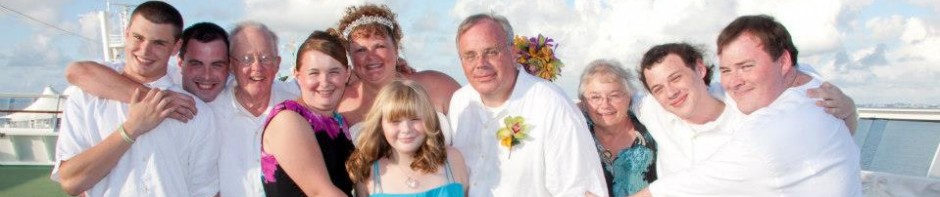
And yet, I’m happy to report that despite life’s ups and downs, faith in marriage is alive and well in the Hill clan. My six kids may be single at the moment, but promises and commitments are forming that will change that soon enough. What amazes me most is that, even though all of them lived through divorce—and the pain that the “D-word” carries—they still believe in marriage. Their foundations could have been shaken permanently, but they still see hope.

When I was a kid, “divorce” was whispered, never spoken outright. As in, “Have you heard the Joneses are getting a divorce? So sad.” In the 60s and 70s, marriage was expected—it was simply the norm.

Faith and marriage are intertwined in every wedding. A wedding is more than a party; it’s an act of faith. It’s the belief that tomorrow can be better than yesterday, and that two people are stronger together than apart.

Some argue you don’t need a piece of paper or a ceremony to prove your love. They couldn’t be more wrong. Love doesn’t need a wedding, but commitment does. Real commitments are made publicly, with consequences if they’re broken. Private promises are too easy to drift from. That’s why the moment matters—the standing before each other, whether in front of three people or 300—and saying, “This is forever.”

Weddings don’t need to be Martha Stewart affairs. They don’t have to be traditional. The bride doesn’t need to wear white. What matters is that the promises are made, and that they are witnessed.

I admit I’m a sucker for tradition. I like when faith and God are present, when the promises are made not just to each other, but to a higher power. And yes, I cry at weddings—at the flower girls (even if they’re puppies), at the walk down the aisle, at the first kiss. I cry because weddings remind us of what is best in people, best in the world, and best in what’s to come.

And a warning to all future Hill family weddings: I plan to dance. If you’re the bride, I’ll dance with you. If you’re the groom, I’ll dance with your bride. And I promise, I am terrible. I have the classic old white man dance moves, and I will absolutely embarrass you and the entire family. But through my off-beat, awkward steps, I hope you’ll see the joy in my heart—that you, too, believe in marriage, and that you will carry this faith forward into building your family.

Love, Dad

Posted in Uncategorized | Leave a comment

Rule 776: The Fable of Maggie


Rule 776: The Fable of Maggie

I’ve always been partial to fables — a great moral wrapped in a simple story. Maggie, Bobbi’s dad’s dog — more properly, Bobbi’s late mom’s dog — had quite the adventure in the last 24 hours. It has become more than a story; it has become a fable.

As for the background, I defer to Bobbi’s own words:

“Our sweet Maggie is HOME!
I am absolutely certain that every single person who shared my posts, put up flyers, tracked the park, prayed for us, or gave recommendations is truly an angel. When Maggie got out of the car, the right angel was in the right place at the right time. She took Maggie to The Glen Nursing Home — the very same Memory Care Facility before she passed. That is no coincidence, that is a miracle.
This kind lady kept Maggie safe overnight. Meanwhile, friends and family rushed to help search — Connie, Tanya, Sandy, Eddie… all by our side. Then came Kim (another angel! a recommendation from our friend Kelly), a volunteer dog tracker who seemed to appear out of nowhere to guide us, post flyers, and comfort us through an emotional storm.
And then came “Babs,” another angel who asked at The Glen if they’d seen a missing dog. When they said yes, she reached out to me immediately: “I think it’s her.”
The next day, Kim got a call: “We have your Maggie. She’s safe, she’s with my mom right now, and I can bring her to you at the park.”
Tears flowed — mine, my family’s, my dad’s. We were speechless. The miracle is that such a tiny dog was found safe in such a busy area. The miracle is that over 5,000 shares on social media reached the right people. The miracle is the overwhelming kindness of strangers who became friends.
Neither Kim nor Maggie’s “overnight angel” would accept the reward. Instead, the reward will be donated to the charity Kim works with, so that more lost fur babies can be tracked and reunited with their families.
I am humbled, grateful, and forever thankful to every single person who helped. This is proof that humanity and love shine brightest when you need them most.
From the bottom of my heart — thank you, thank you, thank you.”


The Captain, Bobbi’s dad, never goes anywhere without Maggie. She was Barb’s dog — a living reminder of Barb’s love even after her passing. Wherever the Captain went, Maggie followed, a thread still binding him to his late wife.

So when Maggie went missing, panic followed. The Captain searched with a frantic heart, and Bobbi and Sandy searched everything through the night. Maggie’s tag still carried Barb’s name and disconnected number, frozen in time — as if updating it would sever the last tie. What had once been a way of remembering now became an obstacle to finding.

That next  day  with worry weighing heavy, my sister Donna reached out to Bobbi. She reminded us of an old Catholic prayer my mother had taught us when our dog Tippy went missing years ago. Bobbi and I stopped everything, and together — with Donna’s help — we prayed out loud:

“Saint Anthony, Saint Anthony, please come around; something is lost and can’t be found.”

Prayer is not a bargain, nor a guarantee. Prayer is a surrender — an opening of the heart to God’s will. It is forgiveness for the moments we cannot control and trust that His hand is still present in our lives.

Within 25 minutes of that prayer, a stranger named “Babs” called. Maggie had been found. She had been taken to the very care facility where Barb had once lived. The same halls she and Maggie had walked together. The same place where love had lingered.

Coincidence? Perhaps. But I believe it was a reminder.

A reminder that prayers are heard, though not always answered the way we expect.
A reminder that forgiveness is part of love — forgiving ourselves for panic, for doubt, for the frailty of being human.
A reminder that the bonds we share with those we love do not end with death.

Maggie’s return is a fable for us all: that in prayer there is hope, in forgiveness there is healing, and in love there is a presence that transcends this world.

Maggie is a good dog — and like all good dogs, she has taught us more than we realized.

When we pray with open hearts and forgive with open hands, love finds its way home.


Posted in Uncategorized | Leave a comment

Rule #301: The first pancake rule

Rule #301: The First Pancake Rule

I love pancakes.

Like bacon, pancakes are proof that God exists — and that He loves us. I’m absolutely certain that, in whatever form heaven exists, they regularly serve pancakes and bacon.

What makes pancakes so special isn’t just that they’re delicious comfort food. Embedded in their existence are life lessons. Lessons like, “A little syrup can make even a burnt pancake taste good,” and “Moderation in all things… except pancakes.” But my personal favorite? The first pancake is rarely the best.

There’s this expectation that if you prepare correctly — following Paula Deen’s recipe to the letter, buying the finest ingredients, and using top-tier cooking gear — then the outcome will be perfect. That each and every pancake will come out golden brown and delicious.

But pancakes remind us that the world is an uncertain place. Small, seemingly insignificant changes — skillet temperature, milk fat percentage, even the humidity — can completely change the outcome. More often than not, that first pancake in the batch — the one you’ve been dreaming about since waking up — ends up misshapen, undercooked, or burned.

The art of making pancakes, like all worthwhile things in life, is not an exact science. It’s messy. It’s unpredictable. It’s personal. It requires attention, finesse, and a little love. And that’s exactly what gives pancakes the power to comfort us.

Realizing and accepting this chaos — the fact that we rarely nail it on the first try — is part of what makes the experience meaningful. Failure is baked into the batter, and that’s okay. It’s essential, even.

Whether it’s your first job, your first presentation, your first test, or your first love, rarely are firsts perfect pancakes. Embracing the failure that comes with the uncertainty of every first attempt is the magic of long-term success. You have to be the runner who trips at the starting line, brushes off the dirt with a swagger of persistence, and starts running again. Accepting failure as part of the process is what makes the second pancake taste so good.

Psychologist Anders Ericsson once introduced the 10,000 Hour Rule: to become world-class at anything, you need to devote at least 10,000 hours of deliberate practice. What that really means is: 10,000 hours of failing. 10,000 hours of disappointing pancakes.

I encourage you to stop by your local Waffle House on a busy Sunday morning and just watch. Don’t eat yet — just watch. It’s not cooking — it’s conducting. A symphony of breakfast. Each team member plays their part — eggs, hash browns, waffles, pancakes — every movement fluid, every note in sync. They’ve put in the hours. They’ve burned their share of pancakes. What you’re witnessing is what mastery looks like.

When I sit at the counter and watch that symphony unfold, I always tip well. I clap quietly to myself. Because I know I’m seeing something uniquely human — a kind of greatness born only of effort. And in that effort, I see something sacred. A little piece of God.

I worry about my kids sometimes — about how discouraged they might feel when they see their own first pancakes flop. I watch Abby graduate from college, excited to make her first pancake in the business world — only to find the skillet too hot, the batter too thin. But she keeps showing up. Keeps flipping. And each pancake looks a little better than the last. They’re still first pancakes in many ways, but she flips with the determination of a great chef who knows the perfect pancake is out there — and that it just takes one more try.

I had over 500 interviews before I landed my first “big-boy” job. Pancake after pancake, and no one wanted a bite. But looking back, after all the success I’ve had, it’s easy to forget those first 10,000 hours of failure. All of it — the doubt, the frustration, the mess — was necessary.

Greatness takes time. A lot of disappointing first pancakes. But nothing tastes as good as that first perfect one, when it finally arrives.

Love,
Dad


Posted in Uncategorized | Leave a comment

Rule # 914 Saying “Wow”: Violence, Curiosity, and the Case for Listening

Rule # 914     Saying “Wow”: Violence, Curiosity, and the Case for Listening


Hello — it’s been awhile. For more than two years I’ve been on a hiatus from blogging and podcasting. I want to thank the 101,032 subscribers for your patience, and apologize to my children for not posting words of wisdom during this absence. Turning 65 required a lot of self-reflection, and that pause was necessary before I could share again.

This past week lit a fire in me. Seeing the horrible shooting and death of Charlie Kirk reminded me how short life is and how important it is to connect with our children and friends about the important stuff. That graphic act of hate made me realize I was wasting time in a life that is fragile and all too short. Regardless of your opinion of what Charlie said, acts of evil like his assassination must be recognized and condemned — not rationalized. Evil is evil; failing to recognize this simple fact gives it power in our lives.

One of the central themes of this blog has always been recognizing evil and how to respond. Some moments — like this shooting — are so extreme they make you say “Wow.” When you see the inhumanity people can inflict on one another, whether it’s an innocent woman stabbed to death on a train or a public personality shot, you find yourself audibly saying, “Wow.”

I’ve been saying “wow” far too much lately.

I tried to raise my kids to value debate, tolerance, and love. My son Matthew disagrees with almost every political viewpoint I hold. He even laughs at me sometimes. But he would defend my right to hold those views, and he loves me unconditionally as I love him.

In the age of Facebook, Instagram, TikTok, and X we’ve become so tribal and defensive that acknowledging a person can be kind and decent — while disagreeing with them on abortion or immigration — seems impossible. My good friend Tim Scroger recently visited and had a long, spirited conversation with Matthew. They debated opposite positions time and again, and they left joking and friendly — not because they shared a vision of life, but because they respected each other’s humanity.

That’s the kind of “wow” we should celebrate. The shock we feel comes because the basic respect and curiosity needed to listen to those who disagree has been lost to tribalization. Being right has become more important than learning.

As Ted Lasso said, “Be curious, not judgmental.” (Often misattributed to Walt Whitman, but true nonetheless.) Simple, tolerant listening is a powerful antidote.

I’ve begun to hate Facebook because posting has been weaponized against other tribes. Defriending and blocking have soared since Kirk’s shooting. Sometimes I say “wow” when I see us forget this is the killing of a fellow human being — an act of hate that cannot be justified.

Bernie Sanders’ recent comments were among the most powerful I’ve read: “Political violence, in fact, is political cowardice. It means that you cannot convince people of the correctness of your ideas, and you have to impose them through force… Every American must condemn all forms of political violence and intimidation. We must welcome and respect dissenting points of view.”

That’s a different kind of “wow” — one that reminds us of the best we can be.

My advice to my kids during these moments: unite with your humanity. Recognize evil and work to diminish it. True love is to love even when you disagree — to find common values and be an agent of good, not evil.


Posted in Uncategorized | Leave a comment

Rule 118: Keep Moving

Rule #118 – Keep Moving

Submitted Question: “How did you get your first job?”
Submitted by: Andrew


I graduated from Penn State in August of 1981—right into the teeth of a recession. The good news? I finished in three years. The bad news? I walked into a job market with 10% unemployment. Mortgage rates hit 18.75% the month I graduated—the highest ever. Nothing was working in the economy.

To make things worse, I had planned to become a land developer and work for a major builder. My degree was in Man-Environment Relations (MER)—a Bachelor of Science program meant to prepare me for site planning and environmental assessment. Problem was, in 1981, no one was building or developing anything.

So I set out for my first “real job” underprepared, underqualified—but extremely enthusiastic.


My First Job (Ever)

I started working at 15 when a friend of my dad’s got me a prestigious job at the old West Point Amusement Park—picking up cigarette butts from the gravel. Sounds glamorous, I know. It was far worse.

I quit after two weeks. My dad was deeply disappointed, convinced I’d thrown away my future in the “entertainment industry.”

But I had bigger dreams: the exciting world of fast food.

The closest place to my house was GINO’S—a now-defunct chain that specialized in burgers (the “Gino Giant”) and KFC chicken. They weren’t hiring in 1976, but I applied five times. I was just annoying enough to wear them down.

I finally landed the job, earning a whopping $1.83/hour training wage. And I was thrilled. That poly-blend shirt and paper hat gave me something I hadn’t had before:

  • My own money

  • Redemption in my father’s eyes

  • And some of the best friends I’ve ever known

I was one of the worst chicken cooks they ever hired. But I was dependable, resilient, and—most importantly—I showed up. I lived ten minutes away and had no social life, so I worked over 40 hours a week.

When I wasn’t working, I was out with coworkers—Jim, Jeff, Al, Marie, Ken, Rick… the list goes on. That job changed me in ways I’ll never be able to fully thank the company for. It taught me that work isn’t just about a paycheck.

It gives you pride.
It gives you a place in the universe.

Everything I needed to know to be successful, I learned in that chicken room.


My First Post-Graduation Job

When I started looking for my first real job after college, I kept that same energy.

I took 80+ interviews at Penn State.
I sent out 500+ letters.
I received 1 job offer.

It was from Franco Harris—yes, that Franco Harris, of “Immaculate Reception” fame. He had fast food chicken franchises in Pittsburgh and offered me a role as an assistant manager for $13K a year.

I turned it down—but not before meeting Franco in person. He was Penn State royalty. Rest in peace.

Instead, I took an unpaid internship with the Montgomery County Planning Commission. That led to a job offer as Assistant Township Manager in Souderton, PA—a low-pay, dead-end role. So I kept going.

I kept moving.


Eventually, a friend of my dad’s mentioned that Harleysville Insurance was hiring underwriting trainees. I got an interview.

While waiting in the lobby, I picked up a copy of the Philadelphia Journal and read an article about the woman I was about to interview with. She had just received her CPCU. In 10 minutes, I learned what a CPCU was, what an underwriter did, and enough to pretend I knew what I was talking about.

I told her I was passionate about becoming an underwriter and eager to pursue a CPCU (whatever that was).

She bought it.

I got the job. $13,500/year.


What I Learned

Looking back, I wasn’t the most qualified candidate for any job I got.

But I had one thing going for me:
I never stopped.

I pushed even when the job was over my head.
I applied everywhere.
I showed up.

And eventually, it worked.


The Rule: Keep Moving

That’s the lesson. That’s the rule.

Don’t listen to people who tell you it won’t happen.
Don’t wait until you’re fully ready or perfectly qualified.

Just.
Keep.
Moving.

Love,

Dad

Posted in Uncategorized | Leave a comment

Children’s Questions- What was my Mom like

Children’s Questions: What Was My Mom Like?

I sort of lost a bit of inspiration for this blog due to business and family issues. Like many of us during the COVID years, I felt a loss of motivation. In a way, I didn’t stop the blog—but I quietly quit putting effort into it.

Then Andrew gave me a subscription to ‘Storyworth’, which allows my kids to submit questions for me to answer. I felt inspired by the idea—and motivated to write again.

So, as long as they keep the questions coming, I’ll make a commitment to the blog again.

Nothing is off limits. I’ll try to answer each question as honestly and completely as possible.

What Was Your Mom Like When You Were a Child?

I’m a child of the ’60s and ’70s—a late-generation baby boomer. My earliest complete memories begin in the late 1960s, around when I was five years old. Most of those memories center around my mom—Peggy Hill.

The Woman Everyone Loved

My mom was the quintessential ’60s-’70s mom—she experienced everything from Studio 54 in New York to hosting Tupperware parties. She had an outgoing, friendly personality that made her hard not to like. I don’t know a single friend or family member who has a bad memory of Peggy Hill. She was just that kind of genuinely kind person—the kind that drew people in with her warmth and humor.

When she passed in 2000, hundreds of people came to pay their respects—each with a story of kindness or love she had shown them.

A Tough Start

Peggy didn’t come from ideal circumstances. Her father, John Mulligan, was an alcoholic. Her mother, Elizabeth (Potts), passed away just 16 months after Peggy was born. The five Mulligan children were left to fend for themselves after their father spiraled deeper into abuse and addiction. Two siblings ended up in Philadelphia orphanages.

Fortunately, a maternal uncle took my mom in, and her older sister—Aunt Skeets—stepped in to care for her.

She told me once that she didn’t really know her father. One day, while walking with her sister past a South Philly stoop, they saw a couple of drunks passed out. Her sister said, “That’s your dad,” and my mom said she couldn’t tell which one he was.

John Mulligan died in April 1947. My mom was just 12.

Not a great start for any child.

Early Life & Education

Despite a rough beginning, Peggy was a bright student. She went to Catholic school and graduated salutatorian of her high school class—a fact she was immensely proud of (even if there were only 30 kids in the class).

For a poor girl from Philly with no support or resources, college wasn’t even a dream. So she went to work at the phone company.

I’ve always believed she had the intellect and drive to succeed in anything. I credit her strength and intelligence with being the force that pushed me to reach higher in life.


Mom in the ’60s and ’70s

When I was a kid, Mom was involved in everything. If you were writing a sitcom, she’d be the model housewife:

  • President of the Junior Women’s League

  • In a women’s bowling league

  • Hosting Tupperware parties and game nights

  • Leading Cub Scouts

  • Teaching CCD

  • Running neighborhood social groups

She made deep friendships in our community and at church. We’d call her friends “Aunt Joan” or “Aunt Elaine” because they were that close. She built a village for us—something she never had for herself growing up.

And the fact that she was Peggy Hill and I was her son Bobby is not lost on my readers who are also King Of the Hill fans. There was a lot of the fictional Peggy Hill in the real one.


Faith and Family

Faith was incredibly important to her. My sister and I went to mass regularly, and even after I was asked to leave the Catholic education system in 3rd grade (due to a stutter and behavioral issues), she kept me in religious education through CCD.

When I turned 10 and became eligible to be an altar boy, she demanded I be allowed—even though I didn’t go to Catholic school. The compromise? I got the 6 a.m. masses. She never let me miss one—waking up at 5:45 a.m. every Sunday to make sure I was on time.

That’s who she was: relentlessly supportive. I was chubby, shy, and had a stutter—but she refused to let the world shut me out.

She pushed me to try every sport (I sucked at all of them). But she gave me the chance to try. Always.


Working Woman & Support System

When I was around 11, she started working outside the home. First at Harriet Carter Gifts as a line packer, then as a bank teller. Eventually, she moved into collateral loans and earned the respect of her peers and senior leadership.

Even with a full-time job, she never missed an event or performance. My dad traveled often—sometimes for months at a time—so the weight of raising two kids fell mostly on her. She rarely complained.


Later Years & Illness

In the late 1980s, as I finished college, she began experiencing symptoms—memory lapses, confusion, and physical issues. My sister recognized it first. It wasn’t until the early ’90s that we had a name: Alzheimer’s.

The disease slowly took everything from her—her job, her spark, her joy.

In the ’90s, I was consumed with a difficult marriage, raising four kids, and building my career. It is my greatest regret that I let the noise of life keep me from being there when she needed me most. She never complained—it wasn’t her way—but I know the pain was real.


Legacy

What she gave me—what I carry forward—is resilience.

She had every reason to quit. Every reason to fail. But she didn’t. She pushed forward, and taught us to do the same.

That’s the lesson I live by. That’s the legacy she left.


Her Birthday

Peggy Hill was born on December 19th. Growing up poor, her birthday was often lumped together with Christmas. As an adult, she fought for her birthday to be its own celebration.

So each year on that day, I remember her—with a prayer, a toast, or a kind word.

And if you’re reading this and feel moved to do the same, I promise you:
She would consider that the perfect birthday gift.

Love, Dad

Posted in Uncategorized | Leave a comment

Rule #51: The Cowardly Lion Rule

Rule #51: The Cowardly Lion Rule

What makes a King out of a Slave? Courage.”
—The Cowardly Lion, The Wizard of Oz

As I watch the tragic events unfolding in Ukraine, I’ve found myself thinking a lot about courage—what it looks like, where it lives, and whether we’re still teaching it.

The citizens of Ukraine are showing us what courage truly is. Against staggering odds and with almost certain risk of death, they fight—not because they want to, but because they must. Watching them, I’m humbled. And I’m worried.

I wonder: Do we still have that kind of courage in us?
Not just in our soldiers or first responders—but in us, as a people? Are we teaching our children what real courage is? Or have we become too comfortable, too insulated, too soft?

Comfort is a Liar

Let’s be honest: most of us are more concerned with Netflix password sharing than actual existential threats. I’m guilty too. When your biggest problem is whether your food delivery app has your usual order saved, you start to think that keeping your life as it is is more important than standing up to anything that threatens it.

We’ve drifted—from being dangerous people who could survive the world, to protected people who fear being offended by it.

Our kids are growing up expecting level playing fields, and sometimes even ones sloped toward their goal. They’ve been taught that their rights are sacred, that being offended is a crisis, and that the score doesn’t matter because “we’re all winners.”

That scares me.

Because courage isn’t born on a level playing field.
Courage is born when things get hard—and you stand up anyway.

A Little Too Much Lori Loughlin

When I saw celebrities bribing their way into elite schools, I wasn’t just outraged—I saw myself. It feels good to use what you’ve earned to smooth the way for your kids. Who wouldn’t want to move obstacles out of their child’s path?

But the problem is, obstacles teach us how to be strong. If you clear all the debris for your kids, they never learn how to push through it themselves.

Watching the Ukrainians fight for their lives, I wonder:
Did I do more harm than help by making things too easy?

Teaching Dangerous Courage

I don’t want my kids to be thugs. I don’t want them picking fights. But I do want them to be dangerous—in the best sense of the word.

I want them to be dangerous to injustice.
Dangerous to despair.
Dangerous to apathy.

I want them to be the kind of people who know how to take a hit—and get up.
Who know that failure isn’t the end of the world—and mockery isn’t fatal.
Who can stand up to evil—even when it’s not obvious, or when it’s cloaked in power.

Life doesn’t owe them anything.
And we as parents don’t owe them an easy path.
We owe them the skills to navigate the hard one.

Because life is hard. It’s unfair. The good guy doesn’t always win.
And sometimes you get fired. Sometimes you lose everything. I know—I’ve been there. Twice with a negative net worth. Fired nine times. And still here.

That’s what makes me dangerous—not my ability to throw a punch, but the fact that I know I’ll get back up.

That’s what I want to pass on.

The Courage to Get Back Up

I want my kids to know that falling isn’t failure—it’s practice.
That pain is a teacher, and scars are notes in the margins.
That life is going to hit them. Hard. And they better be ready to hit back.

Courage isn’t about not falling. It’s about getting up. Again. And again. And again.

Let’s stop cushioning every blow. Let’s stop pretending life is fair.
Instead, let’s raise our kids to be fighters—with compassion, yes, but also with grit.
Let’s teach them that true victory comes through persistence, not protection.

Let’s help them become just dangerous enough to handle a dangerous world.

Love,

Dad

Posted in Uncategorized | Leave a comment

Rule #6: Bad Dad Rule

Rule #6: Being Called a Bad Dad

I want to begin by apologizing to my listeners and readers for my disappearance. I had a personal crisis that took me away from my new podcast and 2catrule postings while I sorted out my emotions and decided how I could regroup.

I’ve long understood that the definition of my life would never be found in what I acquired or achieved. It would be found in how my children — and one day, my grandchildren — live. How they treat others. How they move through the world.

Throughout all these blog posts and podcast episodes, there have always been two consistent life lessons I want to pass on:

  1. Be Kind

  2. Be Grateful

Everything I want to teach my children about life comes down to those two themes.

As I’ve said from the beginning of this journey — I am a flawed man. In the end, I believe my children will learn more from my mistakes than my successes.


I’ve realized that the journey I’m on is an imperfect one, and I’ve made many mistakes. I’m certain I’ll make many more.

I know my children respect and love me — even when they don’t always agree with me. At different points in their lives, they’ve seen me as an authoritarian, a bullshitter (hard to believe, I know), and sometimes just a roadblock to their joy.

But my approach to parenting was never about being loved or even liked. It was about embracing the role of being a parent — and trusting that, in the long run, love would follow. I knew it was impossible to be liked when I was the keeper of resources and the dispenser of discipline. But I wasn’t trying to raise kids who liked me. I was trying to raise good people.

That balancing act was even harder because I was doing it as a divorced father. It made consistency difficult — especially when it came to delivering tough messages. I was incredibly fortunate to have a partner in Bobbi, who supported me in my actions, even when she didn’t always agree with me.

It was consistency in messaging and consistency in love that helped me walk that tightrope. There were some scary stumbles — but no falls.


In the early emotional chaos of divorce, I saw how it affected the kids. I knew I had to get them off the battlefield. Someone had to be the adult. They needed parents — not combatants.

Even when things got bad — when hurtful things were said about me or to me — I kept repeating to myself:
“My kids need a parent. They need me to be the adult. Or their lives will fall into turmoil.”

Sometimes, you just have to suck it up and do what your kids need — even if it makes you look terrible in the moment.

It still sucked for them. Divorce is an unstable state — the emotional equivalent of being rocked back and forth on a boat. They needed something solid to hold onto. They needed to know they weren’t alone.

And as hard as it was, I can tell you: the hits you take as a parent will yield results — even if you can’t see them right away.

As I look at all six of my kids today, ages 19 to 34, I could not be more proud.

Yes, they’ve all been successful academically and financially — but more importantly, they are good people. They understand kindness. They understand gratitude. They’re all imperfect, like their father, but by a large margin, they are winning at the game of life by being good humans.


So what stopped me from publishing this blog and podcast until now?

One of my children called me a “bad dad.”

It happened during a conversation about actions and consequences — a disagreement over how I was approaching a situation. In my 34 years of parenting, I’ve sought advice from books, therapists, friends, websites — and most consistently, from Bobbi. I never claimed to have all the answers. I always tried to respectfully listen to advice, whether it was solicited or not.

My dad gave me a lot of advice too — some I followed, some I didn’t. But I always listened.

At the end of the day, though, parenting is not a democracy. It’s more like a benevolent dictatorship. A smart parent listens. A smart parent grows. But a smart parent must always put the interest of the child first — and that decision rests with the parent.

Everyone who knows me knows I love to negotiate. I’m always open to a good deal. But parenting isn’t business. Eventually, the negotiation must end — and a decision has to be made. That’s the weight of being the adult in the room.


The disagreement that led to me being labeled a “bad dad” was about consequences. And as kids grow older, your list of available, non-physical consequences gets shorter.

When Matthew was five, he was a terror at bedtime. I remember one night, I removed his toys. Then books. Then pillows and blankets. Finally, it was just a bare mattress. It was a battle of wills, and I was almost out of arrows. Thank God he blinked.

It may sound cruel, but it was a defining moment. I couldn’t back down — not for my sake, but for his.

As the kids got older, I used whatever limited arrows I had left: cars, credit cards, allowances, even college tuition. With four of my kids, I only threatened to withhold it. With two, I actually did.

There are very few things more important to me than my kids being well-educated. But raising kids who are kind and grateful is far more important than the degree they have. So when necessary, I used what I had and aimed where it would be felt.


I don’t know how my kids will remember me. Maybe as a tyrant. Maybe as a saint. But neither is true.

All I’ve ever tried to be is a Good Dad.

That title — “Good Dad” — is how I define my life. And when it was questioned, it hurt deeply. So deeply, in fact, that I couldn’t continue these messages until I found clarity and remembered why I was sharing them in the first place.

It made me wonder: Did my kids miss the point?

But after reflection, I realized — they didn’t.

They may not agree with all my postings. But they listen. They use what’s useful. And I’m good with that. That’s what I did with my own dad.

Yes — I was deeply hurt by the comment.
Yes — I regret telling them to “fuck off” when it wasn’t retracted.
Yes — the result has been some painful isolation.

But I remain steadfast in this truth:

Being a “Good Dad” does not require me to be liked. But it does require me to be the adult.

And being the adult means doing what I believe is right — no matter how many votes are against me.


This, ultimately, is a message about parenting.

What it truly means.

If you’re going to raise good people — the ultimate goal of parenting — you must be willing to risk everything. Your time. Your fortune. Your pride. Nothing is more important than the mission of raising good humans.

There will come a time — maybe when they’re 5, maybe when they’re 50 — when your kids will hate you. It’s not just possible; it’s inevitable.

Being the adult in the room means being the one who says no.
No to ice cream.
No to cars.
And sometimes, no to college.

If you have kids, you have an obligation to them — and to the world — to raise the best human beings you can.

You are their last line of defense.
Their last chance to learn clear lessons.
And to experience consequences that shape them, not break them.

Even if it means they call you a “bad dad.”

Because, in the end, that may be the only way to truly be a Good Dad.

Love,

Dad


Posted in Uncategorized | Leave a comment

Christmas Hope

Christmas Hope

Part of becoming an adult—and finding true happiness—is the process of discovering your own meaning of Christmas. In a way, we’re all living out our own version of Dickens’ A Christmas Carol, trying to sort through our lives and become a little less Scrooge and a little more Fezziwig. At its foundation, this journey is a search for hope.

The heart of Christmas is the celebration of the arrival of the Savior of mankind, offering us hope for salvation and purpose.

One of my favorite scenes from what may be the second greatest Christmas movie of all time, It’s a Wonderful Life, is when the senior angel speaks to the angel-in-training, Clarence:

Senior Angel: A man down on Earth needs our help.
Clarence: Splendid. Is he sick?
Senior Angel: No, worse. He’s discouraged.

I think that’s one of the greatest dangers we face in life: the danger of discouragement—a life without hope.

In 2021, we faced the challenges of a virus that changed our lives and, in many ways, robbed us of that hope. We all became, to some extent, discouraged.

Not necessarily by incompetent leaders or misguided scientists—though they may have played a part. The real cause runs deeper. We lost our sense of direction. Many of us began to plan for a future we believed would be dimmer, harder, and simply worse.

To make things worse, we started to see each other as enemies without salvation. People we disagree with—on politics, on medicine—are seen not just as wrong, but as evil or stupid, and therefore without worth. When you stop believing in the promise of salvation, hope vanishes, and discouragement turns friends into foes.

When I think of Christmas and the birth of Jesus, I focus on what His birth meant—and why, more than two millennia later, we continue to debate not just His existence, but His purpose. What makes the Christmas story endure isn’t Santa Claus—it’s the enduring idea that we have been promised eternal hope.

Christmas is a time to reflect on the promise of Christ’s birth: the promise that we can become better by how we treat one another. The gift of Christmas is the birth of Hope through the birth of a Savior.

I know many of my readers—and even my own children—question the existence or purpose of Jesus and God. But even if you don’t believe, you can still celebrate what Christmas represents: that tomorrow can be brighter for everyone, no matter their past choices or mistakes. Christmas is, above all, a promise of hope.

So, no matter how you choose to celebrate, I wish you a lifetime of hope—and the Merriest of Christmases.

Love, Dad


Posted in Uncategorized | Leave a comment

Rule #59- Out by 9


Rule #59 – Out by 9

I had the chance this week to visit Pennsylvania and spend time with my family there. Rachel, Andrew, and Ashleigh are all doing great, and my granddaughters are becoming more adorable by the day. I am truly blessed.

I’ve never believed you have to be physically at someone’s grave to remember them. I think we remember our loved ones through our actions — especially in how we treat others and live out the lessons they taught us.

But since I was in town, I stopped by my parents’ graves. I didn’t expect it to hit me as hard as it did — especially since it’s been more than seven years since my dad passed, and over 21 years since my mom. But just standing there and letting myself feel that loss, I realized how much I still miss them. I’ve let myself pretend their passing didn’t affect me, but that’s just not true.

Grief is a strange mix of sorrow, anger, and — in my case — good old-fashioned Catholic guilt. That regret-driven kind of guilt where your brain replays every mistake, hoping to rewrite the past. I am a deeply flawed man — and, honestly, a flawed son. Neither of them ever made me feel that way, but I know now I could have been better. I carry that regret with me.

This blog, and my podcast, are my way of making penance — to them, to God, and maybe to myself. By sharing the lessons they taught me, I hope to pass them on to my kids and grandkids. My hope is that Aubrey and Hailey will read or listen to these stories someday, and maybe even share them with their own children. In that way, these lessons become a real remembrance. My mom would have adored them — and I like to believe she does now, in her own way.

Sitting by their grave, I remembered a particular lesson my dad once shared. It’s how he stayed sane after my mom passed in 2000 at just 64. Being alone was hard for him — they did nearly everything together. Parties, dinners, travel — even when Alzheimer’s began to steal pieces of her, they still clung to life as a couple, fighting against the inevitable.

After she passed, Dad was lost. He would sit in a dark room with the cat she loved (and he merely tolerated), zoning out. It was only through the kindness of old friends — friends they had made together — that he began to come back to life. First dinners, then events, then a return to community life.

I asked him once how he did it — how he got through the loneliness.

He told me his secret. It wasn’t complicated:
“Get out of the house every day by 9 a.m.”

He said that when you’re old and alone, it’s easy to feel sorry for yourself. “The walls whisper to you,” he said. They remind you of your aches, your sadness. And the more time you spend alone, the more natural it feels — like a drug you grow addicted to. And especially during the holidays, that isolation turns into bitterness, resentment, and self-pity. You start to give up.

So, he made a rule: Out by 9.
Every day. No matter what.

Sometimes it was just a walk around the mall — he had a particular fondness for passing the Victoria’s Secret store (I’ll leave that commentary to your imagination). Other times, it was breakfast with old work buddies or catching a movie. He just made sure to leave the house.

That simple discipline brought him back into the world. It led him to rejoin the local school board — something he gave up when Mom got sick. He even joined the community choir, despite having about as much musical talent as I do — none. But in doing so, he found joy, connection, and a new sense of purpose.

And as I sat there by his grave, I realized just how wise that simple rule really was.

“Out by 9” isn’t just a rule for the elderly or the grieving.
It’s a rule for anyone feeling stuck, overwhelmed, or lost at any age.

When life feels heavy, get up and get out. Step outside your four walls. Engage. Move. Breathe new air. Reconnect.
Because staying inside — physically or emotionally — only makes the world smaller.

As I approach 62, I realize now that my dad’s quirky little habits were full of hidden wisdom. I was probably too busy or too arrogant to see it at the time. But eventually, even the blindest squirrel finds the nut.

So kids — if you ever visit your grandparents’ graves someday, or maybe even mine — don’t dwell on the sadness. Instead, remember the lessons. Especially the simple ones.

Like this one:

Rule #59: Get out by 9.

It just might change everything.

Love, Dad


Posted in Uncategorized | Leave a comment